
The design and tin craftsmanship that make Bluno distinctive
Hello, I’m Uno from Bluno.
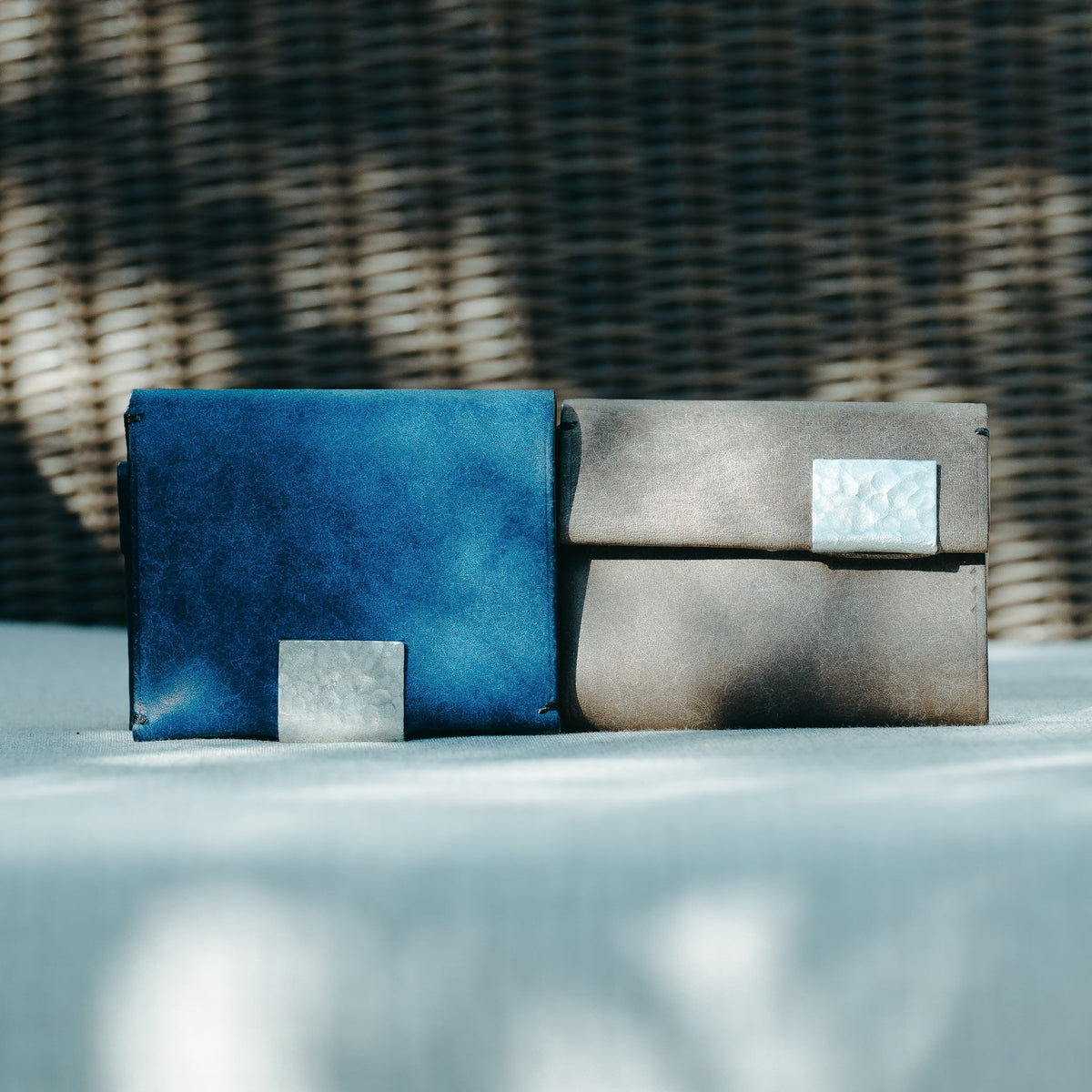
When you look at Bluno’s leather goods, a small silver-colored detail with an intriguing texture may catch your eye.
That material is tin.
A small piece of metal set against leather. Its size is modest, but it holds our ideas about design and making. Today, I’d like to share a little of what lies behind that small detail.

Simple things with a quietly memorable detail
A simple shape that fits into everyday life, yet makes you think, “I really do like this,” whenever you pick it up.
That is the kind of leather goods we want to make at Bluno.
The leather’s color and feel, the curve of an edge, the line of stitches, and the shape and surface of the tin: these small elements come together as one design.
Tin’s subdued silver tone and the way light changes its textured surface sit naturally alongside leather. We value that balance: a little eye-catching without being overly decorative.
To make the shapes we imagine, we also produce our own tin parts, from making the molds to casting and finishing. Being able to design from the smallest detail gives us greater creative freedom.
The skills of leatherwork and metalwork
Making leather goods requires the skills to select, cut, stitch and finish leather.
At Bluno, combining leather with tin adds another set of skills: working with metal.
We make a mold, melt the tin and pour it in, then remove the solidified piece and finish it individually. This way of shaping metal is called casting.
Leather and metal each require their own handling. Both involve handwork, but the tools and points that need attention differ.
Being able to do both ourselves and bring them together in one leather item is, I believe, one of Bluno’s strengths.

A tin shape we like on its own may look a little different when paired with leather. Its size, placement and balance with the leather are all part of the design.
Because we work with both materials, we can consider their combination while testing it with our own hands.
Experience that is not easily copied
A photograph shows the finished piece. Behind that shape, however, are many things we have learned by touching materials and working with our hands.
How can we bring out tin’s character? How does it work with the softness of leather? How do we balance appearance and everyday ease of use?
Each question we consider and test gradually becomes part of the knowledge held in our hands.
I think Bluno’s character lies where this design work meets our leatherworking and metalworking skills. When you include the experience behind the visible shape, there is something that is not easily copied. We value that steady accumulation of experience.
We hope someone picking up a piece simply feels, “There’s something lovely about this.” To support that quiet impression, we want to keep caring for the parts that are not immediately visible, too.
Caring about the time after a piece is made

Leather becomes familiar in the hand and deepens in color and sheen with use. Tin also gathers small everyday marks and the traces of being handled, gradually taking on a quieter character.
If loose stitching, a tin part or anything else concerns you over years of use, please get in touch. Because we make both the leather goods and the tin parts ourselves, we want to remain involved in helping you keep using them through repairs.
Next time you look at Bluno’s leather goods, take a moment to notice the little tin details. We hope their shape and feel give you a sense of the handwork at our atelier.
Bluno / Uno