
Vegetable tanning and chrome tanning: understanding Bluno’s Italian leather

Hello.
This is Uno.
Today I would like to explain, as simply as possible, two terms you may come across when learning about leather: vegetable tanning and chrome tanning.
First, what is tanning?
Left untreated, animal hides will deteriorate and decay over time. Tanning is the process of turning a hide into leather that can be used for years.
The tanning method affects the leather’s firmness, feel and the way its color changes.
What is vegetable tanning?
Vegetable tanning uses substances extracted from bark, wood, nuts and other plant sources to tan leather.
It is a traditional method that takes time. In return, it gives the leather a firm body and a natural character.
Vegetable-tanned leather can feel a little stiff at first.
But with everyday use and handling, it gradually softens. The color slowly deepens, and the surface develops a sheen.
This process, in which leather changes according to the life of the person using it, is often called aging or developing a patina.
Even the same leather will change in color and sheen differently from one person to another. Scratches and wrinkles also become part of the time that person has spent with it.
What is chrome tanning?
Chrome tanning uses chromium compounds to tan leather. One of its characteristics is that it can be completed more quickly than vegetable tanning.
It readily produces soft, supple leather with consistent color and quality. That is why it is used for many products, including shoes, bags, clothing and car seats.
Its ability to process large quantities of leather efficiently is another reason chrome tanning is so widely used.
It may help to think of vegetable-tanned leather as leather that develops as you use it, and chrome-tanned leather as leather that is soft and easy to use from the beginning.
Is one better than the other?
Neither vegetable tanning nor chrome tanning is always superior to the other.
Each method suits different needs, depending on the desired softness, weight, color and intended use.
Nor is vegetable tanning necessarily better for the environment simply because it uses plant materials, or chrome tanning necessarily worse. We need to consider the whole manufacturing process, including water use, chemicals and wastewater treatment, as well as the raw materials.
What matters is understanding the characteristics of each and choosing leather that suits what you want to make.
Why Bluno chooses vegetable-tanned leather
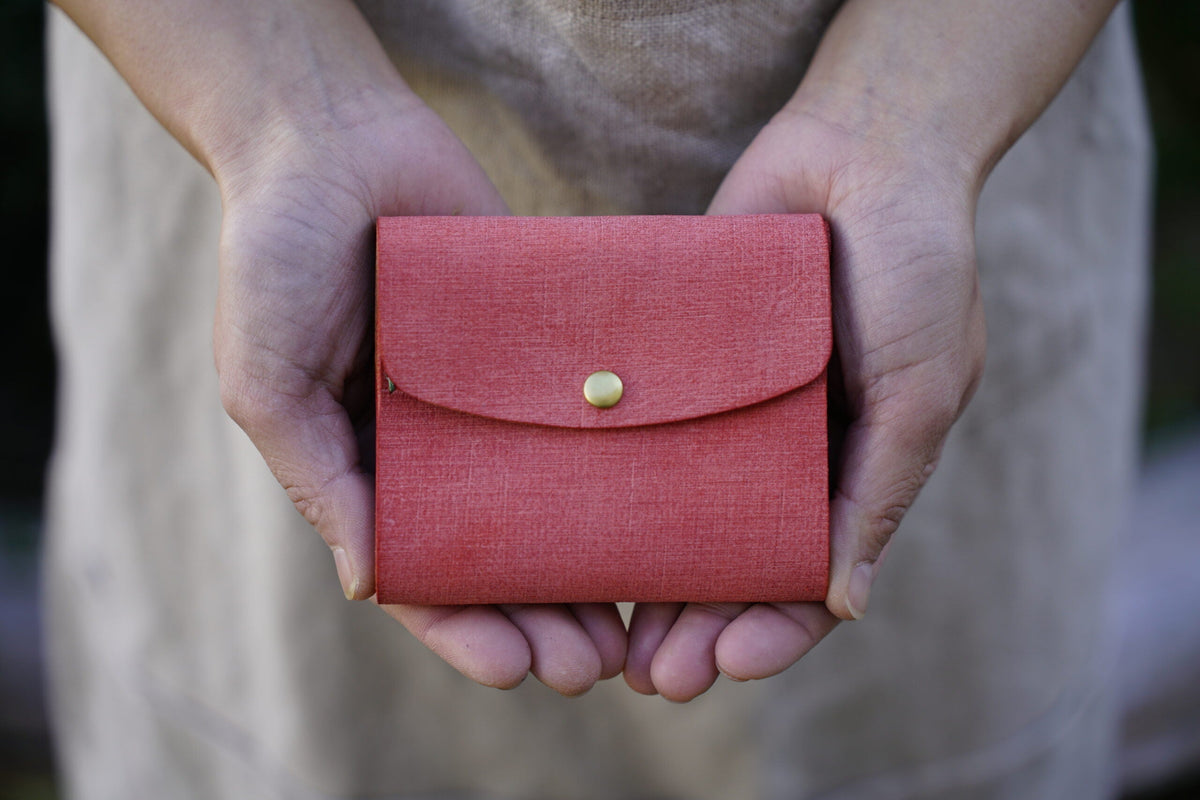
At Bluno, we use vegetable-tanned Italian leather.
As we cut, sew and shape it, we examine the firmness, stretch and character of each piece.
Every hide of vegetable-tanned leather has a slightly different character. With continued use, its color and sheen change, gradually becoming a leather item that belongs uniquely to its owner.
It may acquire scratches. Its color may change.
But those changes are part of what makes it your own. To me, that is the appeal of vegetable-tanned leather.
At Bluno, we care about more than how beautiful something looks when you buy it.
We want to make things you will remain fond of for years, including all the time you spend using them.
Understanding the differences between vegetable tanning and chrome tanning may change the way you look at leather goods a little.